A valley with
a much longer history.
The Gallatin Valley’s human history reaches back thousands of years, long before Bozeman was founded. Gallatin County’s historical account identifies the valley as a place used by Indigenous peoples including the Shoshone, Nez Perce, Blackfeet, Flathead, and Sioux. Its water, plants, and wildlife sustained life here well before surveyed streets and brick homes.
Rouse House belongs to a later chapter: the growth of a nineteenth-century town within that older landscape.
From trail stop
to lasting community.
Bozeman emerged during Montana’s gold rush as a supply point for people travelling toward the mining districts. The valley’s agricultural promise also drew people who stayed to farm, trade, and build businesses. In 1864, William Beall and Daniel Rouse helped John Bozeman lay out the townsite.
That beginning helps explain the house’s connection to its surroundings. Rouse was involved in shaping the town itself, years before building the brick residence that survives on East Babcock Street.
Rouse, Bozeman & Beall.
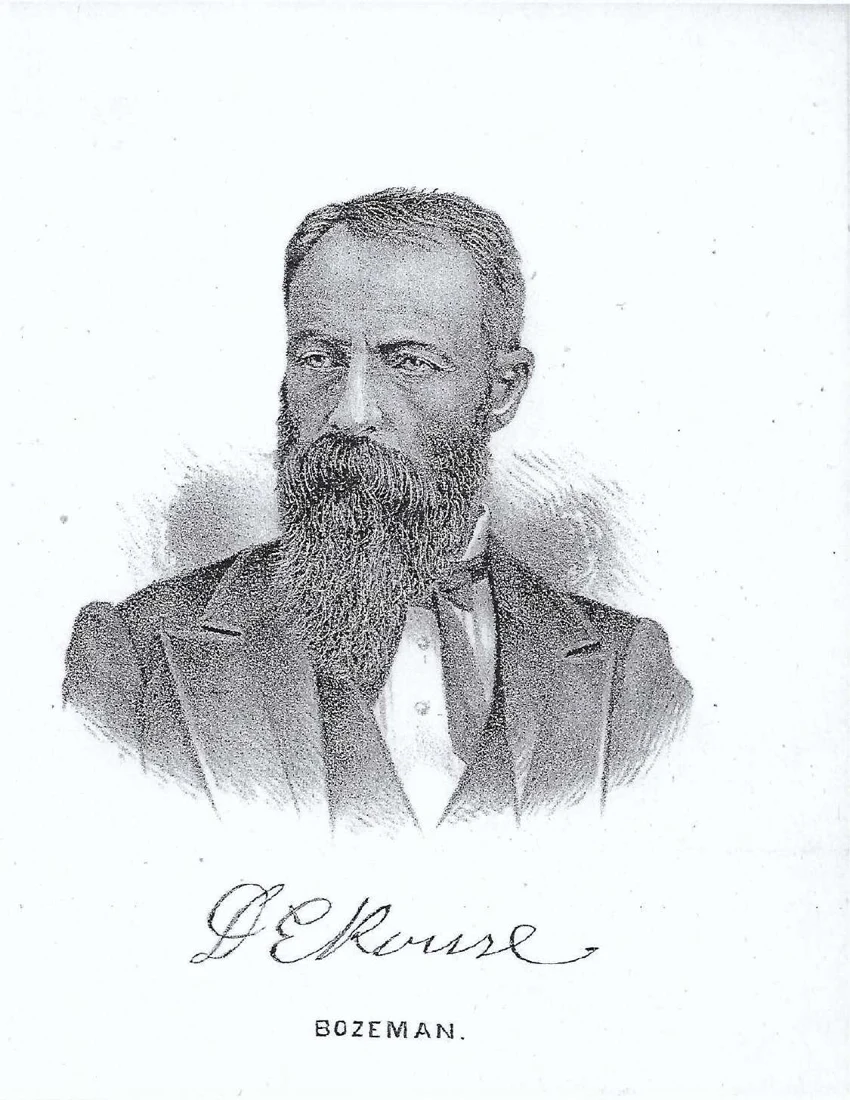
Daniel Rouse’s connection to John Bozeman and William Beall was practical and consequential: together, they helped lay out the town in 1864. The street grid outside this house is part of that shared legacy. Their story connects an individual family home to the beginnings of a community.
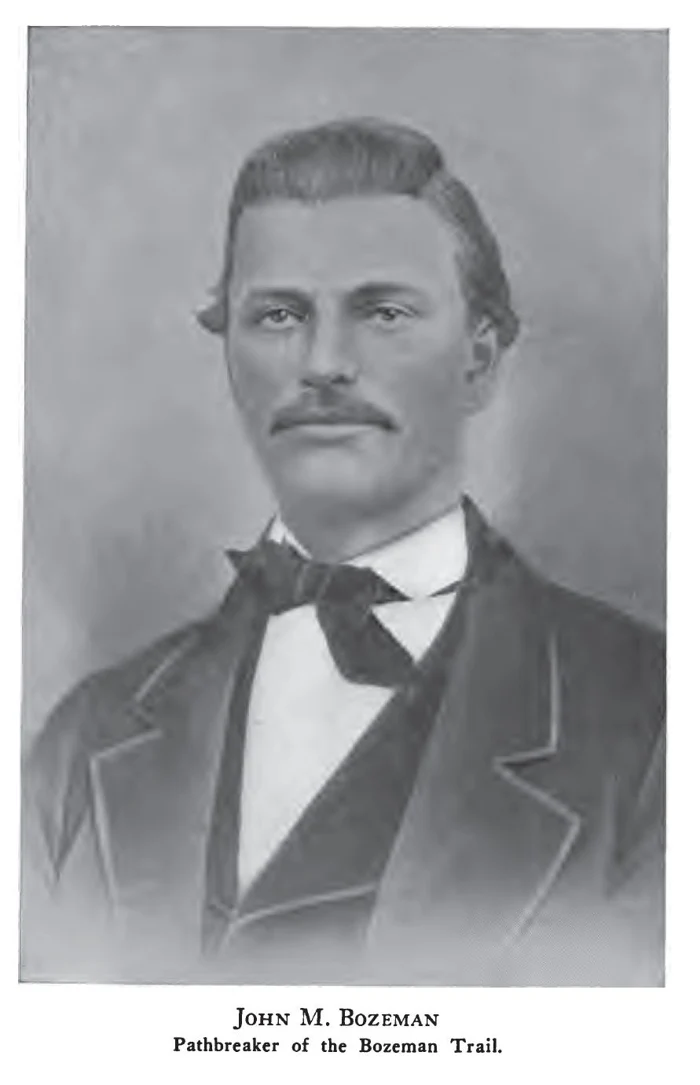
John Bozeman · A route and a town
In 1863, Bozeman and John Jacobs developed a wagon route toward Montana’s goldfields along a corridor Indigenous peoples had used for centuries. The route brought settlers through tribal lands and became a focus of conflict. Its development belongs to a difficult history of westward settlement as well as the story of the town that bears his name.
Read the National Park Service’s trail history ↗
William Beall · From townsite to buildings
Beall’s contribution extended beyond laying out streets. He designed and built the Tivoli Beer Hall at 17 East Main, a surviving connection between the founding generation and downtown’s commercial architecture. Looking at these buildings makes the founders’ work tangible: their legacy includes the places where people traded, gathered, and made everyday lives.
Remembering the people who kept the story
Rosa Beall also helped preserve the community’s memory. Her scrapbook brought together photographs, clippings, and personal keepsakes documenting the Beall family and early Bozeman. Her story reminds us that a town’s history depends on those who save its records as well as those who survey its streets.
From townsite to family home.
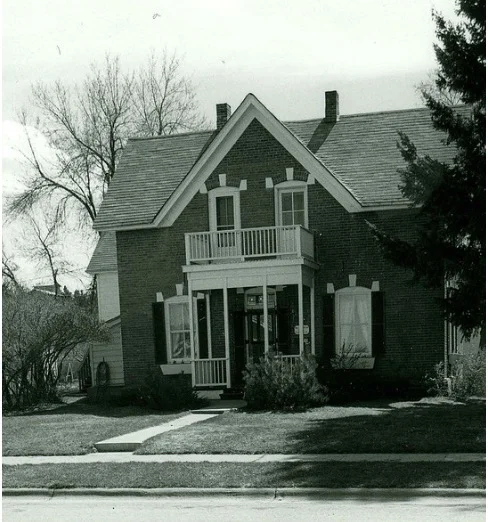
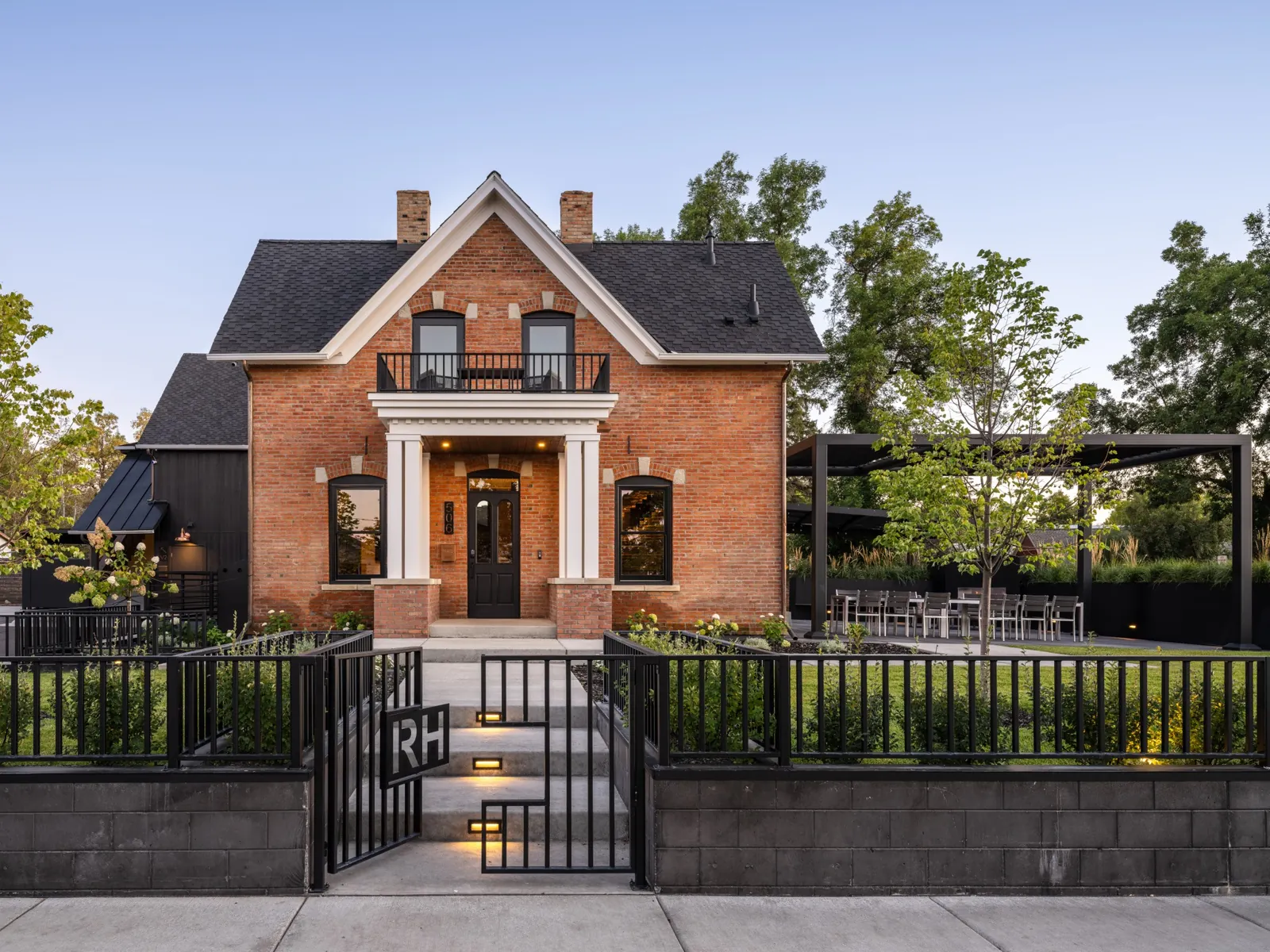
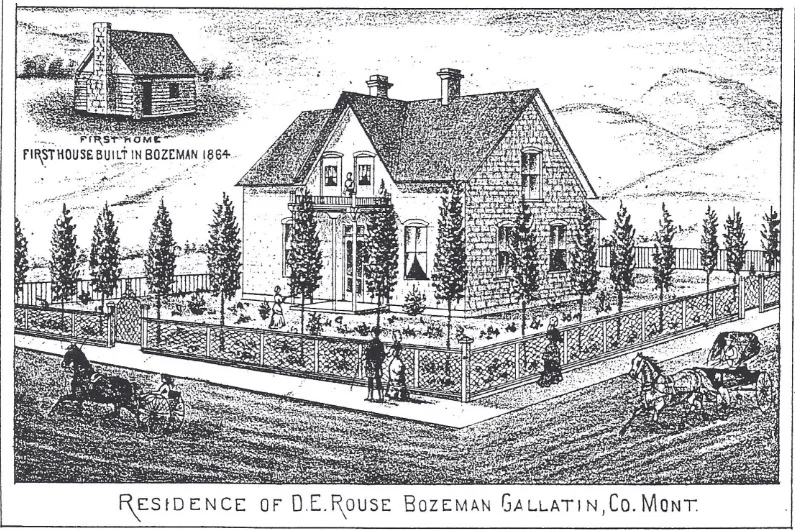
Built in 1881, Rouse House was the residence of Daniel E. Rouse, who helped John Bozeman and William J. Beall lay out the town in 1864. As Bozeman expanded, Rouse reserved a generous corner parcel in his second addition for his own home.
His earlier home was a log cabin. This later brick residence reflected a growing community’s ambition for permanence. Rouse owned a brickyard; the historic nomination suggests that the house’s brick probably came from his own yard.
History in the details.
The house combines an I-house form with Gothic Revival and Italianate influences. Its distinctive cross gable and stone accents above arched windows and doors give the exterior its enduring character.
Individually listed on the National Register of Historic Places on October 23, 1987, Rouse House offers a personal connection to Bozeman’s earliest chapters.
A house built
before the railway.
Rouse House was already standing when the Northern Pacific reached Bozeman in 1883. The railroad connected the valley more closely to distant markets and helped accelerate the town’s growth. Agriculture, milling, commerce, and new investment shaped the community around the house.
Bozeman incorporated that same year. Montana statehood followed in 1889, and the town’s unsuccessful campaign to become the state capital encouraged further investment. Its substantial buildings expressed the ambitions of a community looking beyond its frontier beginnings.
The roots of
today’s Bozeman.
Montana Agricultural College held its first classes in 1893, beginning the institution now known as Montana State University. Agriculture and education became lasting parts of Bozeman’s identity, alongside tourism associated with nearby Yellowstone National Park.
The changes surrounding Rouse House—from rail connections to a growing college—help place an 1881 family residence within the broader story of the city.
Read the city
through its streets.
Downtown’s surviving buildings offer more chapters to explore. The Gallatin History Museum identifies the Cooper–Black Building at 118 East Main, built in 1872, as Main Street’s oldest surviving structure. The Bozeman Hotel, completed in 1890, reflects the town’s growing aspirations after statehood. The Ellen Theatre opened in 1919, adding another landmark to its cultural life.
Seen together, these places connect domestic life, trade, travel, and entertainment. Rouse House is one part of that larger historic fabric—a place to stay while discovering the city around it.
Bozeman, block by block.
An early Sanborn fire-insurance map turns the story into a place you can explore. This sheet records part of Bozeman in January 1889, eight years after Rouse House was built. It is a detailed snapshot of buildings and streets, rather than the original 1864 town plat.
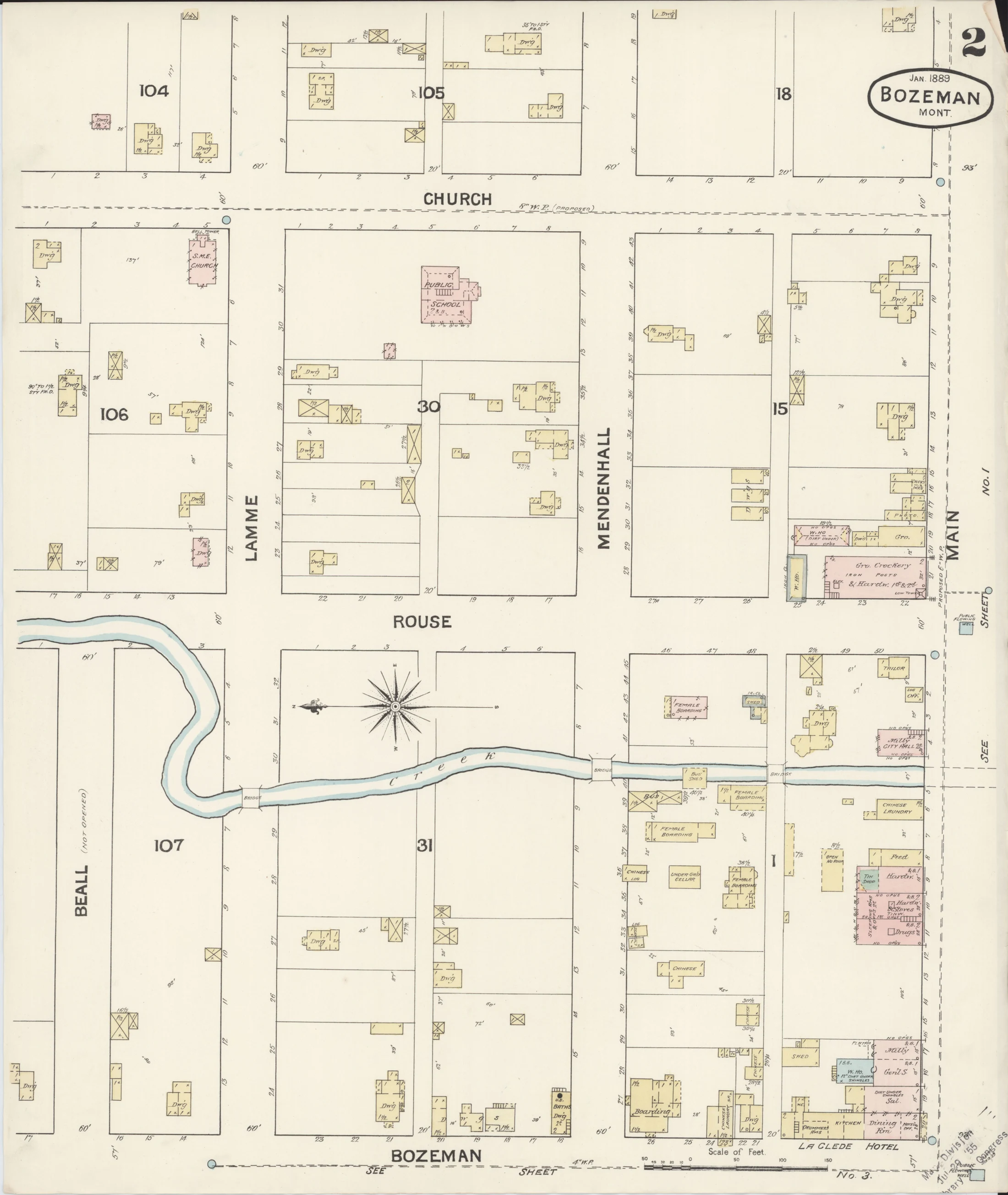
Follow the street names and individual building outlines to compare the nineteenth-century town with the city outside your door. The map is presented as historical context; it is not a current property survey or guest parking guide.
1864 · Rouse helps lay out Bozeman’s original townsite.
1881 · Rouse House is built.
1883 · Bozeman incorporates and the Northern Pacific reaches town.
1893 · Montana Agricultural College holds its first classes.
1987 · The house is individually listed on the National Register.
From streetcars to storefronts.
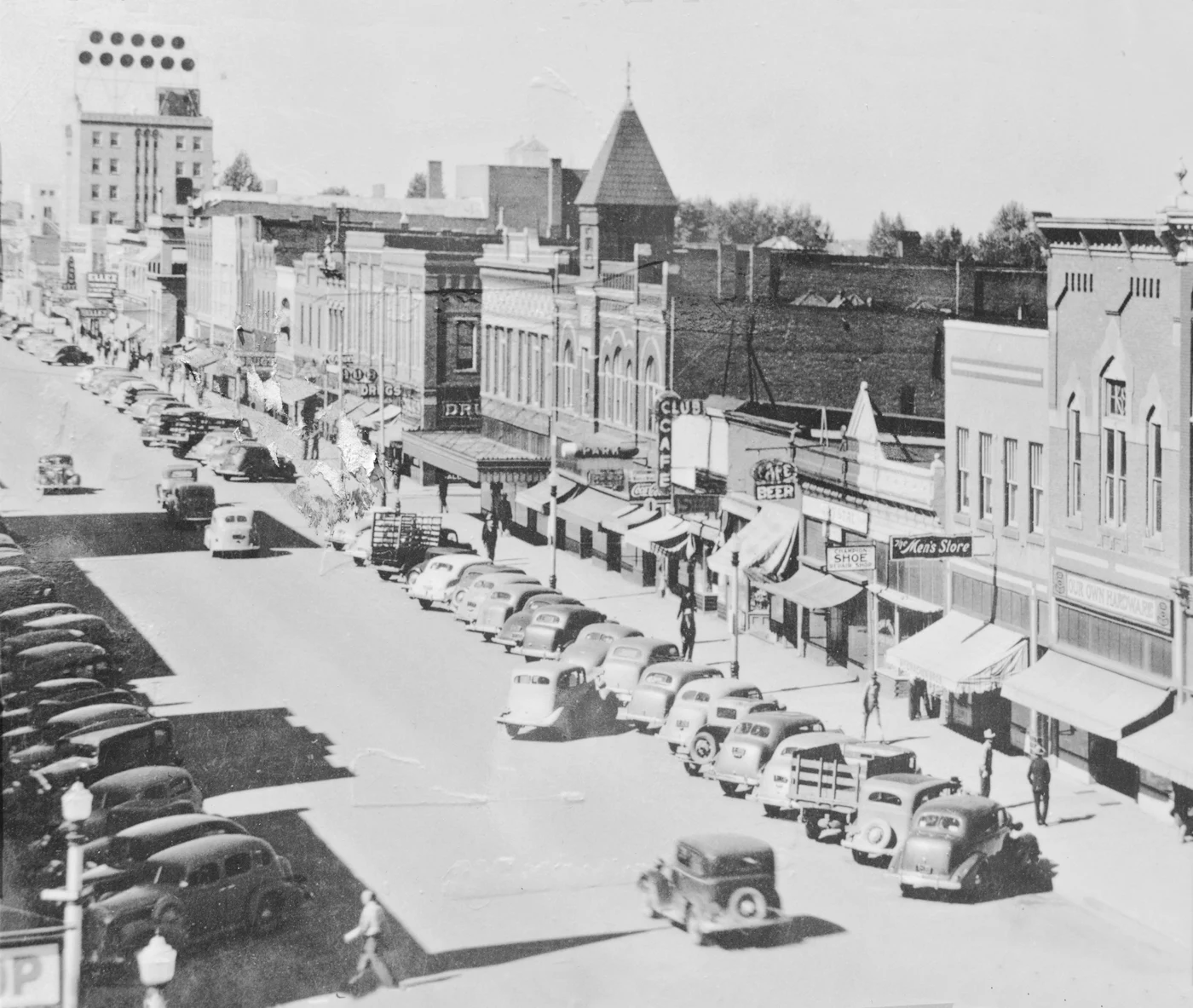
Bozeman’s streetcar service began in 1892 and ended in 1921. The city continued to change as automobiles became part of downtown life. Photographs preserve those shifts in everyday detail: parked cars, shop signs, building fronts, and the rhythm of a working commercial street.
A college with modest beginnings
The Agricultural College of the State of Montana opened in 1893. Its early campus included buildings inherited from the city’s poor farm, log cabins, and small outbuildings. The college and its agricultural experiment station connected education with the valley’s working landscape—a foundation for today’s Montana State University.
Explore MSU’s agricultural beginnings ↗
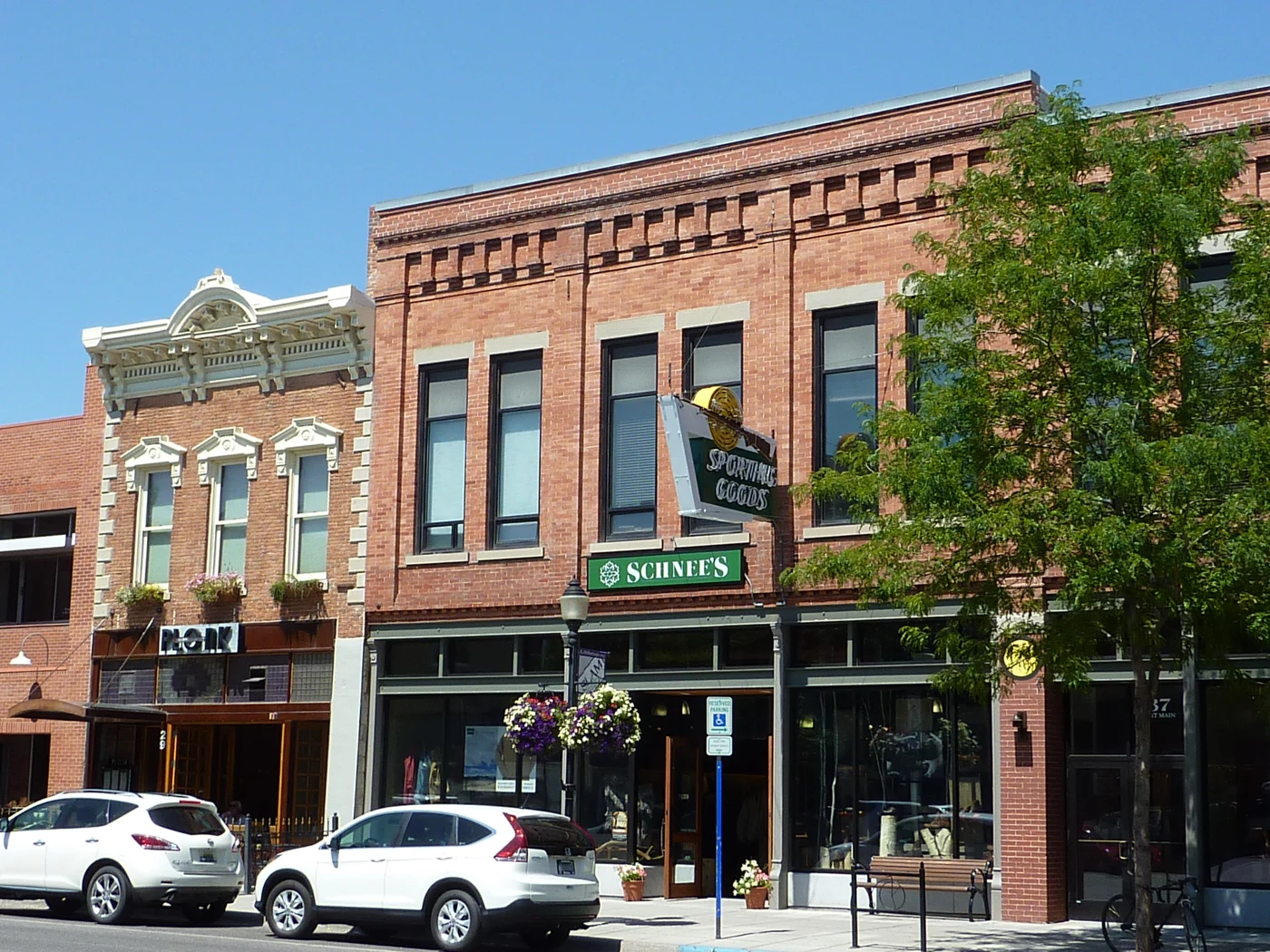
Explore downtown with an eye for the upper stories: brick patterns, cornices, and arched windows often tell an older story above contemporary shopfronts. Then return to Rouse House, where the town’s founding history has a particularly personal address.
Explore the Gallatin History Museum’s buildings and street history ↗